
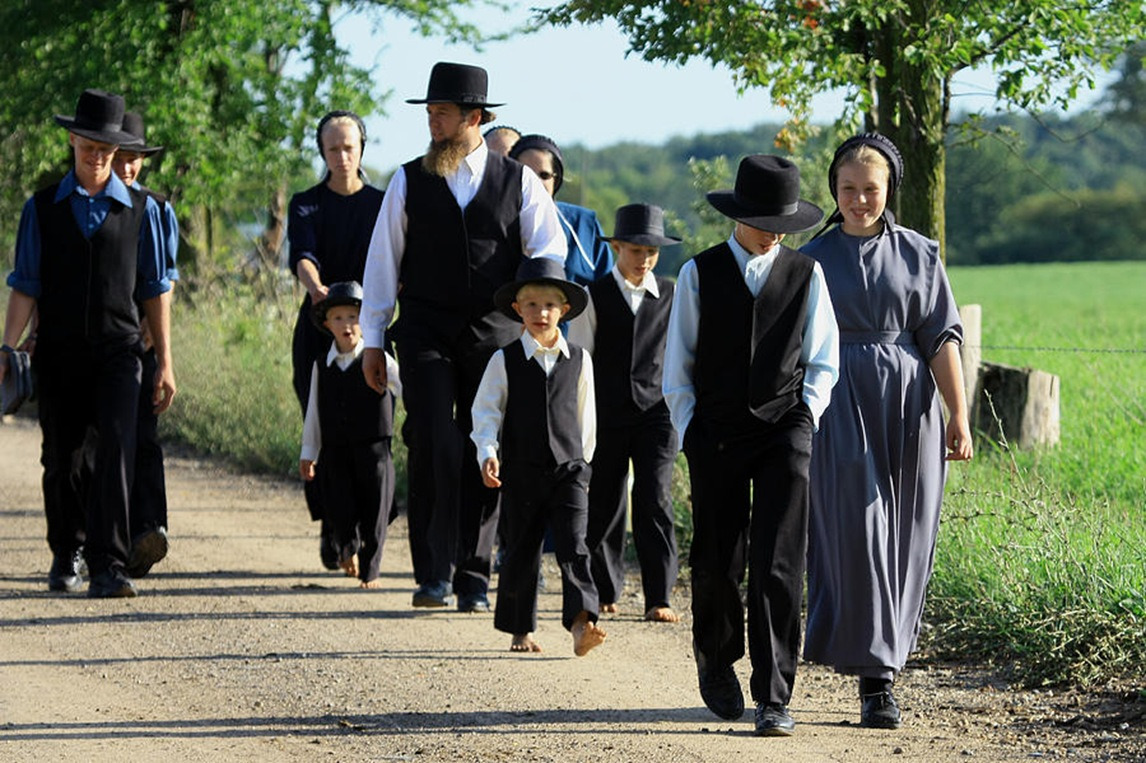
As a boy I attended a church that was founded in 1962. It grew from a group of Christians meeting together in their homes for Bible study. They were disenchanted with the liberal drift of the mainstream Protestant denominations and decided to get back to basics. They did not believe they were doing anything new. Instead they were returning to the simple principles of the early church.
From their reading of the New Testament, they concluded that the first Christians met in homes to sing hymns, study the Bible and pray together. Eventually the founders of our church wrote a constitution, bought land and built a church building and school. They did not regard this as anything more than a natural outgrowth of their first, simple communal meetings in their homes.
The idea that a new church or denomination is really a return to the simple, early days of Christianity is called Restorationism. It is the active result of an underlying assumption called Christian Primitivism, which is the Christian expression of a more general philosophical position called ‘Primitivism’–the belief that some earlier, simpler and more basic civilization is better than the present one.
Christian Primitivism and its active expression, Restorationism is written into the genetic code of Protestantism. It is an seductive ideal, but it provides a fatally flawed foundation for Protestant churches. Before we examine the problems of Restorationism (and it’s foundation, Primitivism), it is worth looking at it’s history.
Let’s Start at the Very Beginning
The urge to shed accumulated ‘traditions of men’ and return to the simple gospel message is nothing new. The first Christians to fall into this trap may have been the Montanists in the mid second century. Like modern-day Pentecostals, the Montanists emphasized the work of the Holy Spirit and prophecy. Their opposition to the organized church and ‘loyalty’ to the Holy Spirit suggests a restorationist agenda.
Other ancient heretical groups had primitivist tendencies, but the first separatist group to be clearly driven by restorationist zeal, were the Paulicians. They were founded in the mid 600s by an Armenian named Constantine, who claimed to be restoring the pure Christianity of St Paul. The Paulicians were Adoptionists (believing that Jesus became the Son of God at his baptism). Influenced by Manichaeism, they rejected infant baptism, the clergy, monasticism, the doctrine of the real presence, and all iconography.
In Bulgaria three hundred years later a new shoot sprang out of the Paulician sect. The Bogomils (meaning Dear Ones of God) grew in reaction to what they perceived as the corrupt established church of their time. They met in their own homes, rejected the priesthood, rejected the doctrine of the real presence and believed that all should be taught by the simple minded. They also rejected monasticism and did not accept marriage as a sacrament. Like the Paulicians, the Bogomils were dualists–believing in equal good and evil forces in the world.
Henry the Monk and Waldes (from whom the Waldensians are descended) were wandering preachers in the twelfth century who lived simple lives and preached against the corruption of the church. They gathered groups of disciples around them, while at the same time the Cathars carried on the dualistic and heretical teaching of the Bogomils. All these pre-Reformation groups were primitivist in their beliefs and restorationist in their actions. As such they were the pre-cursors of the Protestant Reformation.
Anti Tradition Tradition
Restorationists might be opposed to human tradition, but by the sixteenth century they had developed their own venerable anti-tradition traditions. Usually their reasons were sincere and urgent. Wherever the church is corrupt, complex and privileged the urge for primitivism and restorationism is strong. People long for a simple and pure church of the early days. Simple Christians want the church to be for simple people. They read the gospel and see Christ ministering to the outcasts, the sick and the ordinary people and believe that is what the Church should be like. They are not wrong in their desire for simplicity and purity, and so it is easy to see why Restorationist movements are so attractive and successful.
While Luther and Calvin initially wished to reform the established church, the more extreme Protestants were radical in their restorationist zeal. The Hussites and the Anabaptists were the most radical, and it is the radical restorationism of the Anabaptists which comes down to us today as the grand-daddy of all the subsequent restorationist movements.
The Anabaptist line continues through the Quakers, Shakers and other sects to the Landmarkists, who claim a line of succession for Baptists right back to John the Baptist. The Calvinist and Wesleyan ‘Great Awakening’ in the eighteenth century was radically restorationist, followed by the similarly restorationist ‘Second Great Awakening’ in the United States, but by now the restorationists were not only reacting against the Catholic Church, but against all the other historic Protestant denominations.
Through the nineteenth century in America wave after wave of Restorationist churches sprang up. The Christadelphians, Christian Conventions, Seventh Day Adventists, Latter Day Saints, and Jehovah’s Witnesses. At the same time a strong restorationist movement (the Cambellites) fostered independent groups like the Churches of Christ, Disciples of Christ and the Christian Church.
The tradition continues today with each new wave of Protestantism reacting not only against Catholicism and liberal Protestantism, but also against the previous generation of restorationists. In the 1960s my family attended an independent fundamental Bible Church. Then in the 70s the charismatics, with their house churches and local communities picked up the restorationist baton. The eighties saw the growth of charismatic mega churches like John Wimber’s Vineyard and now a whole range of local community churches fly the restorationist flag. For all their rejection of tradition, it seems the restorationists follow their own well established traditions.
Restoration or Reproduction?
My grandmother had a ‘French Provincial’ dining room suite. Her white and gold ornate table and chairs had nothing to do with Louis XIV however. They were a twentieth century furniture designer’s take off. Similarly, Restorationist churches are the product of the imagination of ‘church designers’ who produce an imitation product. They are attracted to an idea, draw some inspiration and come up with their own reproduction.
There are ten problems with Primitivism and Restorationism. Five have to do with Restorationism itself, and five go to the roots of the Primitivist instinct. When the problems are outlined we can understand why Restorationist movements are inherently unstable and why the deeper Primitivist instinct is ultimately unsatisfactory.
Firstly, each restorationist movement, although it seeks to return to the ancient church of the apostolic age, is actually produced as a reaction to the circumstances of its own age and culture. For example, the peasant movement of the Bogomils came out of a church weighed down with corruption and aristocratic influence. The radical reformers in sixteenth century Europe and the New World were influenced by the utopianism, the rise of the nation state, and revolutionary spirit of their age. Similarly, the American restorationist movement of the eighteenth and nineteenth centuries was determined more by the independent, anti-establishment mentality of the American frontier than by any real reference to the church of the apostolic age. Restorationists believe they are restoring something ancient. In fact all they do is create an expression of Christianity which is a reaction against the circumstances and assumptions of the age in which they live.
Secondly, while Restorationist movements are reactions to the particular age in which they live, they are also conditioned by the long history of Restorationist movements. For hundreds of years Protestants have perpetuated a particular vision of the early church. Each new Restorationist movement borrows those ideas, never questioning whether the tradition they are inheriting is actually true to the reality of the early church or not. Therefore, the Restorationist doesn’t so much restore primitive Christianity; he simply replicates are earlier Restorationist model, re-producing what he has been told early Christianity was like.
This assumption leads to the third problem: The Restorationists are usually totally ignorant of what the early Church was really like. They assume is that the early church was congregational, not hierarchical. They assume it was non liturgical and non sacramental. They assume it was Bible based. They assume there was no clergy and that the congregation met in people’s homes. They don’t have any evidence for these assumptions, and all of these assumptions are simply not true, or if they were true in some isolated places they are not the whole truth. (see my article in This Rock )
The reason the Primitivists are ignorant of what the primitive Church was really like is because they are largely unaware of the writings of the Early Church fathers. Most if them do not know that we have documents telling us just what the early Christians believed, how they worshipped, how the Church was structured.
This ignorance is not only the lack of education, it is also the result of the Protestant dogma of sola Scriptura. The Christian primitivist believes that his hymn-singing, Bible studying little home church is what is found in the Bible, but even that is unsupportable. While we do find examples of house churches in the New Testament (Rom.16:5; I Cor.16:19; Col.4:15) we also find the apostles meeting for worship regularly in the Temple, (Acts 2:46; 3:1; 5:42) and St Paul always went to worship first in the synagogue when he went to a new city in his missionary travels. (Acts 14:1; 17:2)
The fourth obvious problem with Restorationist movements, is that they are blind to their own cultural and historical contradictions. On the one hand, they wish to go back to the basics, but on the other hand, they wish to be ‘relevant’ to the modern age. How can they be both? Can a restorationist church have a radio station? Can they have high tech worship? Can they have a website? What about moral issues? Can a primitivist congregation speak about in vitro fertilization, climate change, artificial contraception, globalization and a whole range of other contemporary issues? If so, where does he find the information and authority to do so?
The fifth problem with the Restorationist movements is that they contradict one another. If each group was simply returning to a beautiful, basic Bible religion, wouldn’t they all agree? Instead the different Restorationist movements all disagree with the other Restorationist churches, and to make matters worse, the Restorationist movements are notoriously fissiparous. If they were returning to a simple, clear and unadulterated gospel message and church structure why have they split and splintered into tens of thousands of separate ecclesial groups?
Primitivism’s Problem Principles
The first five problems are critiques of Restorationism, which is the outworking of Christian Primitivism. They reveal deep fractures in the edifice, but the fractures are there because of deeper fault lines that run through Primitivism–the philosophical foundation of Restorationism. Like all faulty foundations, the problems lay hidden, but it is in examining the foundations that we see the deeper problems.
The first foundational problem of Christian Primitivism is the denial of the necessity for the visible church. One of the foundation assumptions is that all church institutions are provisional. They are necessary evils. They are man made institutions. As such they are to be distrusted and they are disposable. Built into this assumption is the bias that the Catholic Church ‘cannot possibly be right.’ Therefore the Catholic Church is simply ‘another denomination’ like every other, and if it seems corrupt or apostate it should be scrapped to start again.
The second problem is the naive belief that the Church should be immaculate. In other words, that it is possible that the Church should be sinless. Rightly shocked by the corruption of members of the established church, primitivists wished to return to a purer and more basic church. This is unrealistic. What they failed to see was that there is no such thing as the perfect church. They overlooked the fact that among the apostles themselves there was a traitor, one who betrayed the Lord, cowards, sinners and weaklings, and that the Lord prophesied and allowed that the wheat and the tares would grow together.
The third foundational problem of Christian Primitivism is that while the Primitivist wants an immaculate church he does not believe in an infallible Church. Along with the denial of a visible church, Primitivists also deny an infallible church. Because the Catholic church has (in their view) departed from the truth, she cannot be infallible. But this assumption is leaky, because the primitivist’s whole enterprise is an attempt to recover a church that was pristine and pure and (by inference) infallible. Either there was an ancient infallible church, in which case it has never failed because it cannot fail, or there was never an ancient infallible church, in which case, why bother to attempt a recovery of it?
The fourth foundational problem is connected with the third. Primitivism is based on the assumption that the Catholic Church is not infallible, and that there is no such thing as an infallible church, but the primitivist would have us believe that his ‘restored’ church is infallible. It is true that he does not state this belief openly, yet he heartily believes it is so, for he has given his total allegiance to this church. But if his restored church is infallible, why does it clash with all the other restored churches and why did God allow six or ten or nineteen centuries to pass before establishing it? If, on the other hand, this restored church is not infallible, why should I (or anyone else for that matter) be expected to owe allegiance to it?
The fifth underlying problem of Primitivism is the most blatant of all. Assuming that the primitive church is the church of the first century (and this assumes that there is a cut off point when the church ceases to be ‘primitive’–and who decides that?) how can anyone really know what the first century church was like? We have archeological evidence. We have Scriptural evidence. We have documentary evidence, but all we can do is the delicate and tentative work of the historian. We cannot really get back into the skin of first century Christians in the Roman Empire. We can’t really understand the culture, the assumptions and the worldview of former Jewish and Gentile Christians in the Roman Empire. Even if we could come up with an accurate checklist of all the attributes of the primitive church, who would decide which of the attributes we wanted to re-create and which ones we would omit? Shall we have house churches or mega churches? Shall we exclude women from ordination, but allow them to not cover their heads in church? Shall we have simple Bible preaching, but not speaking in tongues and miraculous handkerchiefs? Shall we have sacraments but not slaves; Bible studies, but not bishops?
Linked with this problem is the biggest elephant in the living room: Why it should necessarily be a good thing to re-create the primitive church at all? We live in the twenty first century, not the first. Any attempt at recovery can never be anything more than an artificial reproduction–with the same relationship to primitive Christianity as my grandmother’s dining room table has to the furniture of Versailles or Cinderella’s castle at Disneyland to Windsor Castle.
The Alternative
When faced with a church that is corrupt, complex and seemingly out of touch, Christian Primitivism seems like an admirable ideal. To establish a simple, down to earth form of Christianity seems laudable. If one is going to start a religion, it is a good thing to wish for that religion to be the ancient faith that comes to us from the Apostles.
Given that it is a laudable thing to want one’s church to be connected with the Church of the first century, and accepting the arguments put forward here on the intrinsic flaws of Primitivism, one has therefore to ask if any link with the primitive church exists, and if it does, where one might find it.
Catholics have always believed that the primitive church never ceased to exist. It was established by Jesus Christ himself on the rock of Peter and his divinely inspired profession that Jesus was the Son of God. This church, as Christ promised, has withstood the test of time. She has been buffeted by corruption from within and persecuted by enemies from without. Nevertheless, the gates of hell have not prevailed against her, and time and again, led by the Holy Spirit, the Catholic Church has been reformed, renewed and refreshed.
The primitive church may have become more complex, but she did not cease to constantly preach the simple message of Jesus Christ and his saving work on the cross. The primitive church may have adapted and changed and grown throughout two thousand years of history, but she has not become something different. Her understanding of the apostolic deposit of faith may have developed and matured, but she did not alter that faith once delivered to the saints. Members of that primitive church may have stumbled and fallen; they may have sinned and caused scandal; they may have obscured the gospel and betrayed the gospel, but in every age there have always been saints who have remained radiantly faithful.
Catholics maintain today, as we have always done, that the primitive church is alive in the world as she has always been. Just as the simple pauper’s tomb of the fisherman lies beneath the soaring dome of St Peter’s so the primitive church lies at the heart of Catholicism.
At her head is the successor of Peter and at her feet is a world more in need of her message of forgiveness and love than ever before. It is a good thing to search for the primitive church, but why embark on an empty quest to create your own when the Catholic Church stands waiting–ever ancient and ever new.

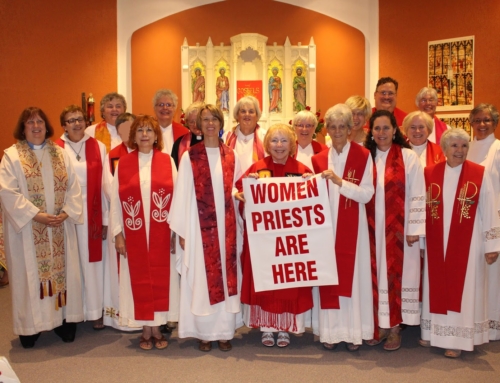
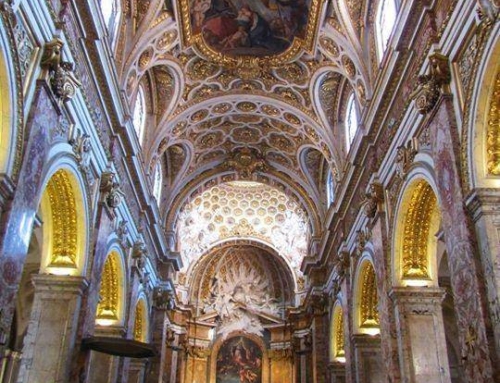
[…] The Problem with Primitivism – This is found in the Church History section and explains why primitivism is an illusion. If you’re not sure what “primitivism” is–its the idea that something must be better if it is like the earliest and most primitive manifestation. So in church circles, “it must be better if it is like ‘the early church’. Well not necessarily. […]
[…] I am, by nature and nurture, a conservative. Therefore it is easy for me to dismiss progressivism in a breezily curmudgeonly fashion. However, because I am a conservative it is my instinct to value what is old. (That’s why I went to live in England for twenty five years!) I have to stop and remind myself that primitivism is also a problem. I have written on the problem of primitivism here. […]
[…] more general problem which is the problem of primitivism. I have an extended article on primitivism here. But to summarize it–we live in the 21st century not the 1st. It is impossible to replicate […]